
Mudras for your Practice

Updated: Jun 20
Mudras are gestures that affect the energy and breath flow in the body. Mudras originate from the Vedas and other texts from the ancient and medieval periods, and continue to be a part of the living yoga tradition. Hand mudras, facial mudras and full body mudras are used in various yoga lineages, as well as in Buddhism. It is the hand mudras (hasta mudra in Sanskrit) that are the most widely known type of mudra, and are also the easiest to incorporate into our daily lives.
Mudras can help calm the nervous system, improve focus and awareness during meditation, and support the body’s natural healing processes. These gestures are not ends in themselves or magical cures, but are intended to aid in invoking and cultivating our inherent positive qualities and to support our journey towards health and spiritual development.
Mudras can be used during meditation, or as a separate practice throughout the day, held for several minutes at a time. This can be done at a set time, or whenever you find that you need more grounding. To enhance the practice and make mudras more powerful, positive affirmations can be used alongside mudras Using affirmations supports the essence of each gesture, and acts to engage the mind on both the unconscious and the conscious level. Combining mudras with affirmations helps us to harness the power of intention for positive change more fully.
Below you will find three different mudras along with the ways to practice them, and corresponding affirmations. Each of these mudras will support your sense of calm and groundedness in a slightly different way. Choose the one that resonates the most and incorporate it into your practice. While the gestures themselves should be formed as exactly as possible without creating strain, the affirmations can be adapted to better attune to your personal intentions. Repeat the affirmation at the start and end of the practice.

Adi Mudra: Gesture of Primordial Stillness
How to form: Make loose fists with your hands, wrapping your fingers around the thumbs, keeping your hands relaxed. Place your hands on your lap, facing down.
How to practice: Observe sensations in our hands. Focus on the breath, breathing softly and slowly, pausing gently after each exhale. Send your breath into the lower body. Cultivate the sense of stillness and calm in the body and the mind.
Affirmation: I breathe softly and slowly, my whole being enveloped in calm and stillness
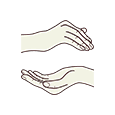
Pala Mudra: Gesture of the Alms Bowl
How to form: Place your left hand, gently curled, below the navel facing up. Place your right hand, gently curled, above the navel facing down.
How to practice: Sense the energy between your hands. Feel your breath in the abdomen, with each breath sensing comfort, ease, and releasing tension. Move your awareness through your body, starting at the feet and moving up, to invite the whole body into this sense of ease and safety. Just like Buddhist monks with their alms bowls trust that sustenance will be provided to them, so we can feel calm and trust that the universe provides for all our needs.
Affirmation: Resting in my own true being I experience ultimate security
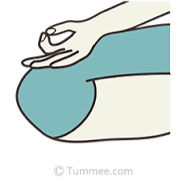
Jnana Mudra (pronounced gnyah-nah): Gesture of Wisdom
How to form: Touch the tip of the thumb to the tip of the index finger, forming a circle. Extend the other fingers while keeping them relaxed. Place the back of the hands onto your thighs.
How to practice: Notice sensations awakened by this gesture. Observe the breath in your upper torso, focusing on experiencing clarity. Become aware of your thinking mind, observing your thoughts as a witness. Bring awareness to the quiet spaces between the thoughts, entering into an effortless meditative state.
Affirmation: Through the wisdom of seeing clearly I experience my true being
This blog incorporates work of Joseph Lepage of Integrative Yoga Therapy on mudras, and images from tummee.com.
To subscribe and receive future posts and news from Asya visit the home page and scroll to the bottom for subscription form


Comments